Chhota Shakeel
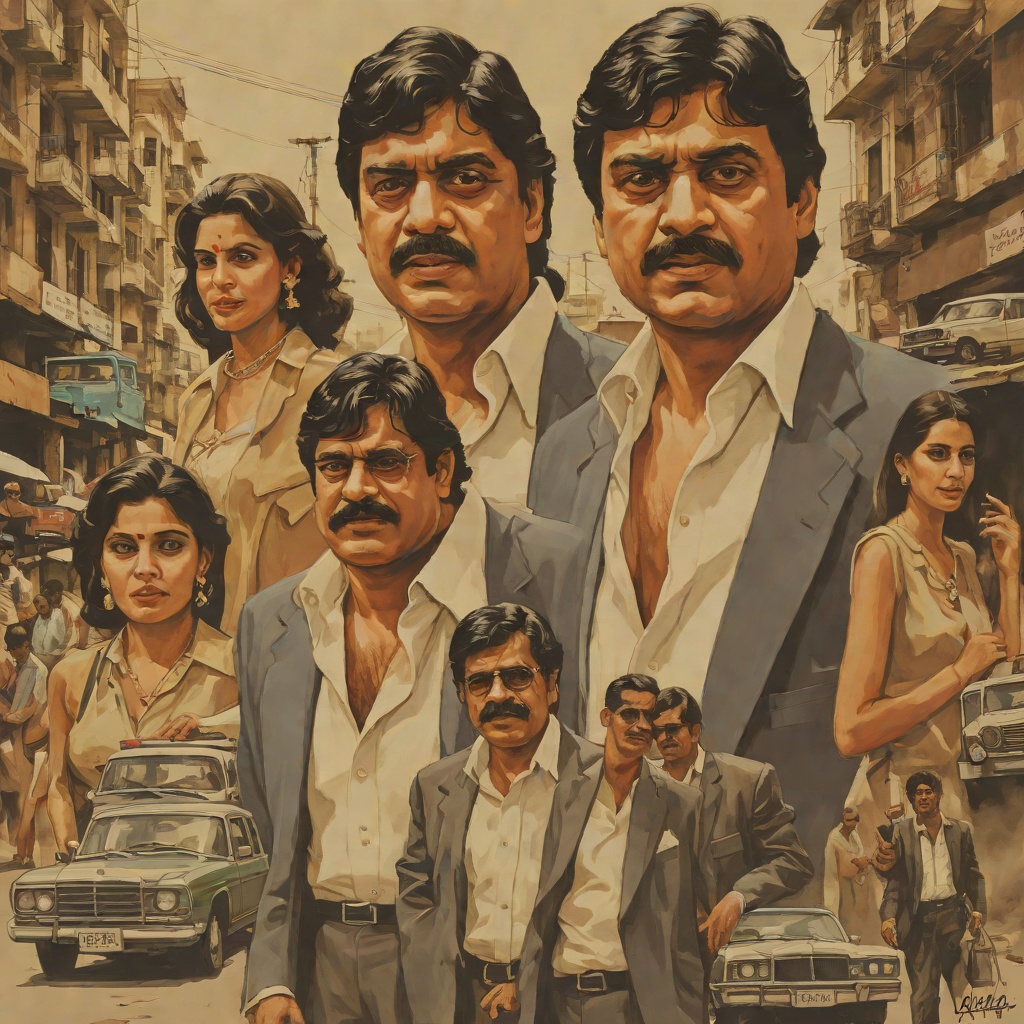
Mafia Queens of MumbaiChhota Shakeel stands as the most formidable and feared lieutenant in the Mumbai underworld, the right-hand man to the exiled don Dawood Ibrahim. His name recurs throughout the book not as a mere participant in the city's gang wars, but as the decisive enforcer whose actions shape the narrative's most violent turning points. Shakeel is the operational brain of the D-Company, a man whose bad temper and known propensity for violent reaction make him a figure of dread, and whose strategic acumen extends from orchestrating high-profile assassinations to quietly managing a network of female operatives. He is the axis around which the book's central dramas of loyalty, betrayal, and retribution revolve.
The Enforcer of Dawood's Will
Shakeel's primary function in the narrative is as the executor of Dawood's authority, a role he performs with a chilling and calculated brutality. When Sapna Didi, a woman who dared to stand up against Dawood, began plotting against the don, it was to Shakeel that one of her own men squealed. The narrator, aware of Shakeel's temperament, knew he was not among those who would keep quiet after hearing of such a daring plan. The code of not hurting women or children, which the mafiosi had rigidly followed, was expected to protect Sapna, but Shakeel's reaction proved that this code was expendable when the challenge was grave enough. His response was not a threat but a meticulously planned execution, designed to make an example of her. On a night in 1994, when Sapna was alone and down with a high fever, four men entered her home in Hujjrah Mohalla and, instead of killing her quickly, subjected her to an extreme level of torture, deliberately targeting her breasts and vagina with over twenty-two stab wounds. The message was unmistakable: Shakeel would not tolerate defiance, and his vengeance would be as grisly as it was absolute.
The Architect of the Ustara Ambush
Shakeel's strategic patience is on full display in the killing of Hussain Ustara, a sophisticated gunman who had failed to avenge the death of Ashraf Khan. Aware of Ustara's reckless love for the company of beautiful women, Shakeel set a chain of spies on him, waiting for the perfect opportunity to strike when he was off guard. That opportunity came on the evening of 11 September 1998, when Ustara drove out alone to his girlfriend's house near Nagpada. The message was relayed to Shakeel in Karachi, who immediately ordered his men to assemble and ambush the gunman. Within an hour, eight men had taken their positions, and when Ustara exited the building, they showered him with a volley of bullets, firing over twenty rounds that mowed him down and punched holes in his car. The use of an AK-47 in the shootout was a rare occurrence, signaling that Shakeel's men were armed to the teeth and that Ustara, despite his legendary ability to cock his German Mauser and fire in three seconds, never stood a chance. The attack was over in seconds, a testament to Shakeel's ability to coordinate a lethal strike from a distance.
The Manipulator of Women
Beyond his capacity for violence, Shakeel is portrayed as a master manipulator, particularly in his dealings with women. With most of his aides behind bars, the Karachi-based don needed women who were less prone to scrutiny to supervise his gang's activities in Mumbai. He roped in the ambitious wives and female relatives of his most trusted aides, taking instructions from them over the phone or the internet. A normally hard taskmaster, Shakeel believed in sugar-coated conversations to motivate his women, and these telephone sessions often strayed into mushy, flirtatious repartee. It was this charisma that won him resourceful aides, women who, after being hypnotised by his flirtatious ways, channelised all their energies to become efficient coordinators of the gang. The tech-savvy Mrs Paul and the rotund beautician Rubina Siraj Sayyed were the most prominent examples of this league, women who were wooed by Shakeel not for their beauty but for their utility, their ordinariness making them perfect, unseen cogs in his criminal machinery.
The Shadow Over the Underworld
The book consistently presents Shakeel as the dark force whose influence permeates the lives of the women it chronicles. His power is felt not only in the direct violence he orders but also in the climate of fear he cultivates. The narrator's conviction that it is much easier to be a Dawood Ibrahim than a Jenabai Daaruwali is rooted in the fate of women like Sapna, who was given a dastardly death by the don's acolytes. Shakeel is the personification of this gendered terror, the one who ensures that women who dally with the mafia do so at their peril. His reach extends even to the city's geography, as his men operate in the 'sensitive zones' of Dongri and Nagpada, areas that became epicentres of bloodshed and destruction. He is the unseen hand that guides the D-Company's most ruthless operations, a figure whose name alone is enough to make the city's underworld stiffen in collective fear.